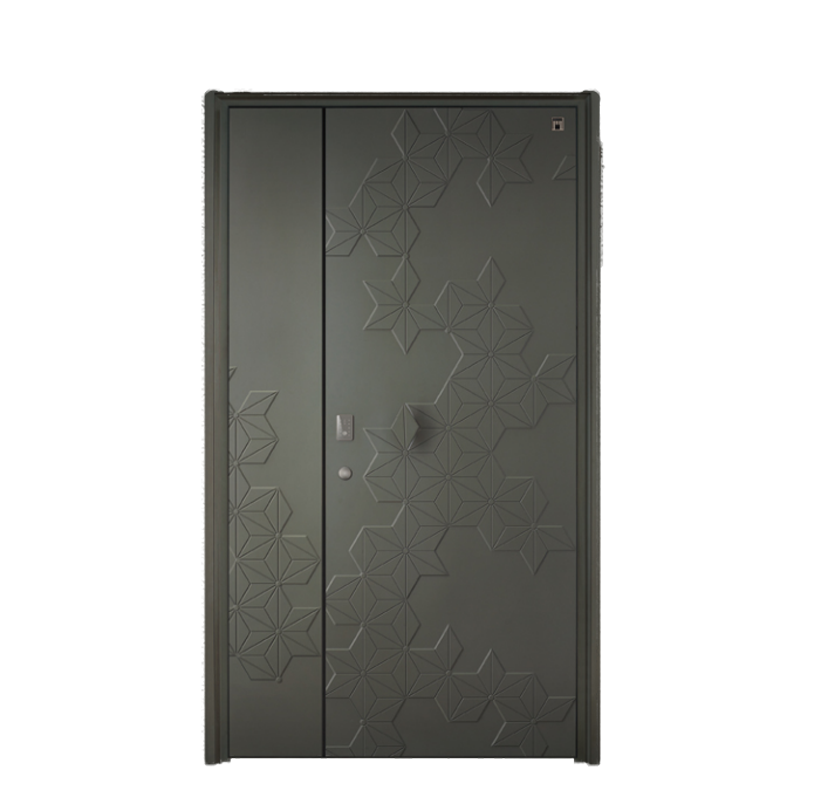
To mitigate wind pressure damage on aluminum doors in tornado-prone regions, fluid dynamics optimization can be implemented through the following strategies:
1. Aerodynamic Shape Design
Streamlined Profiles: Curved or tapered edges reduce turbulence and lateral wind forces by minimizing air resistance. Computational fluid dynamics (CFD) simulations can identify optimal shapes to redirect wind flow around the door.
Vortex Disruption: Adding small, strategically placed fins or grooves on the door surface disrupts vortex formation, lowering suction forces during high-speed wind events.
2. Structural Reinforcement
Multi-Point Locking Systems: Distributing wind load across multiple locking points prevents localized stress concentrations, enhancing resistance to deformation.
Reinforced Frames: Using high-strength aluminum alloys (e.g., 6063-T5) with internal stiffeners or honeycomb structures improves rigidity while maintaining lightweight properties.
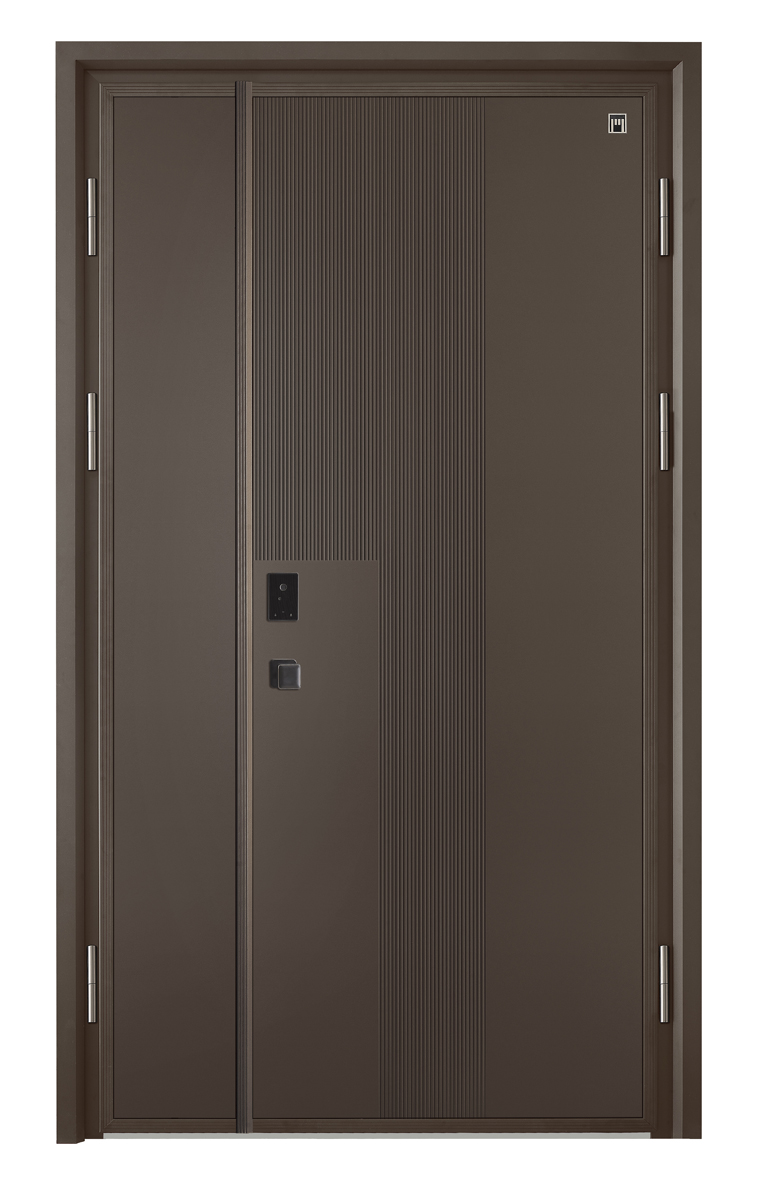
3. Material and Component Optimization
Laminated Composite Panels: Combining aluminum with impact-resistant materials like fiber-reinforced polymers or laminated safety glass reduces vulnerability to debris and pressure fluctuations.
Dynamic Pressure Equalization: Integrating vents or pressure-relief valves balances internal and external pressures, preventing sudden structural failure during rapid pressure changes.
4. Sealing and Edge Detailing
High-Performance Gaskets: Silicone or EPDM seals with aerodynamic contours minimize air infiltration, reducing wind-driven rain penetration and oscillatory forces.
Flush Thresholds: Smooth transitions between the door and frame eliminate gaps that amplify wind suction, a critical feature for Entrance Doors in tornado zones.
5. Dynamic Response Adaptation
Adjustable Hinge Systems: Hinges with dampening mechanisms absorb kinetic energy from gusts, protecting Room Doors from repetitive stress.
Sensor-Actuated Bracing: Smart systems deploy internal braces when wind speeds exceed thresholds, ideal for large Villa Doors requiring adaptive strength.
Application-Specific Considerations:
Entrance Door: Prioritize aerodynamic shaping and multi-point locks for high-traffic areas.
Room Door: Focus on lightweight yet rigid designs to balance safety and usability.
Villa Door: Combine aesthetic customization (e.g., tempered glass inserts) with reinforced frames for large spans.
These optimizations leverage fluid dynamics principles to enhance resilience against tornado-induced wind pressures while maintaining functionality across door types.