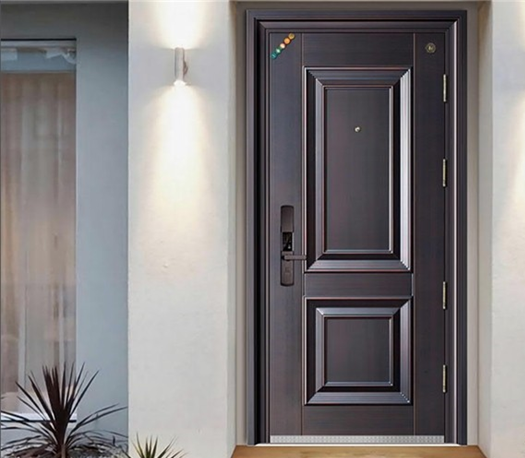
Aluminum entrance doors have emerged as a cornerstone of modern architectural design, combining structural integrity, energy efficiency, and aesthetic versatility. This article examines the technical specifications, manufacturing processes, and regulatory frameworks governing these systems, with a focus on compliance with North American and international standards.
1. Material Composition and Structural Design
Doors And Windows Aluminum Profile forms the foundation of high-performance entrance doors. Key alloys such as 6061-T6 and 6063-T5 are preferred for their tensile strength (≥240 MPa) and corrosion resistance. Critical design features include:
Thermal Breaks: Polyamide insulating bars (typically 24–34mm width) reduce thermal bridging, achieving U-values as low as 1.2 W/m²·K in triple-glazed configurations.
Frame Construction: Standard profiles range from 70mm to 100mm in depth, supporting door leaf weights up to 150kg with reinforced stainless steel hinges.
Surface Treatments: Anodized finishes (AA-M12C22A41 per AAMA 611) or fluoropolymer coatings (AAMA 2605-compliant) ensure 20+ years of weather resistance.
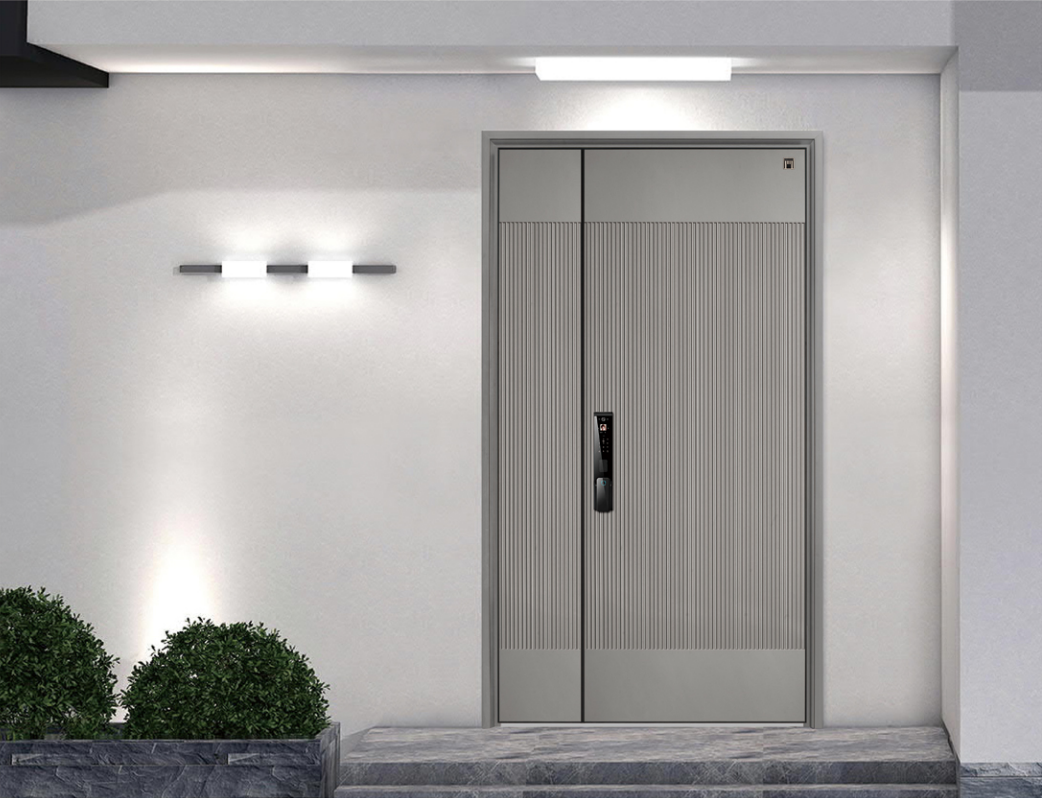
2. Manufacturing and Installation Protocols
The production of aluminum entrance doors adheres to strict fabrication guidelines:
Precision Cutting: Extruded profiles are mitred at 45°±0.5° using CNC saws, ensuring joint tolerances <0.3mm.
Assembly: Corner keys and screw-fastening systems (e.g., Torx T30 security screws) create rigid joints with deflection limits of L/175 under wind load .
Sealing Systems: Triple EPDM gaskets (3-chamber design) and structural silicone glazing achieve air infiltration rates ≤0.3 CFM/ft², exceeding AAMA/WDMA/CSA 101/I.S.2/A440-22 requirements.
Installation requires:
Shim spacing ≤400mm for vertical members
Anchoring with 316 stainless steel fasteners at 300mm intervals
Post-installation air leakage testing per ASTM E283
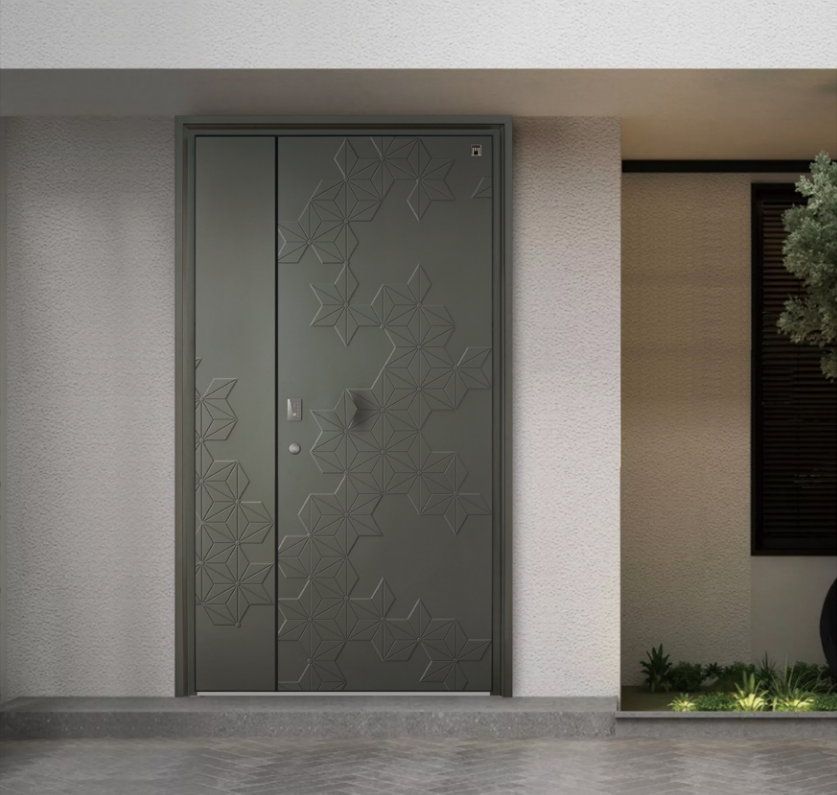
3. Performance Certification Mandates
North American building codes enforce rigorous compliance criteria:
Parameter Requirement Test Standard
Air Leakage ≤0.3 CFM/ft² @ 75 Pa NFRC 400
U-Factor ≤0.77 (Double Glazed, Thermal Break) NFRC 100
Forced Entry Resistance 5-cycle dynamic load ≥4,500N AAMA 1302.5
Cyclic Pressure 3,000 Pa (Wind Load Zone IV) ASTM E330
Certification labels must remain visible until final inspection, with permanent NFRC ratings etched on glazing spacers .
4. Sustainability and Lifecycle Considerations
Modern aluminum entrance doors contribute to circular economy objectives:
Recycled Content: Minimum 70% post-industrial scrap in primary extrusions
Energy Recovery: Secondary smelting reduces production energy by 95% vs. primary aluminum
Disassembly Design: Mechanically fastened components enable 90% material recovery at end-of-life.
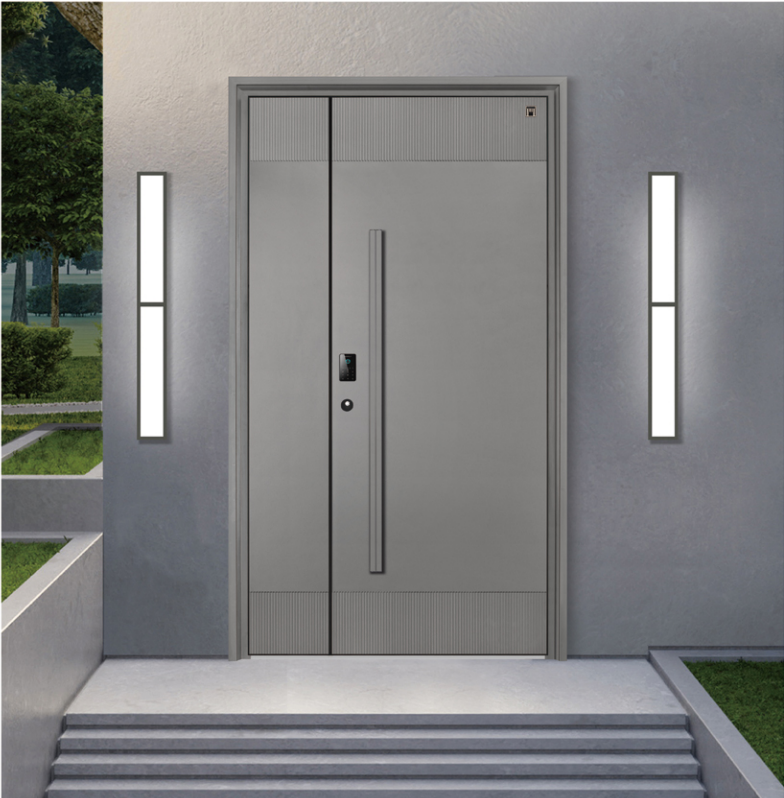
5. Emerging Innovations
The sector is advancing through:
Graphene-Enhanced Alloys: Improving hardness by 40% while maintaining conductivity
Smart Door Systems: Integrated sensors monitoring seal integrity (IoT-enabled predictive maintenance)
Dynamic Glazing: EC glass with adjustable VT (0.15–0.72) synchronized with building automation systems
Conclusion
As codes evolve toward net-zero building standards, aluminum entrance doors engineered with Doors And Windows Aluminum Profile technology will remain pivotal in balancing security, energy performance, and design flexibility. Compliance with AAMA 2605 coatings, NFRC 400 air seals, and thermal break innovations positions these systems as sustainable solutions for 21st-century architecture.
Foshan Nanhai Jinfancheng Metal Building Materials Products Co., Ltd. is a leading innovator in aluminum architectural solutions with 15 years of expertise. Specializing in Entrance Doors, Room Doors, and Villa Doors, the company combines cutting-edge technology with artistic design to deliver secure, energy-efficient, and aesthetically refined products. Equipped with ISO9001, ISO14000, CCC, and CE certifications, Jinfancheng ensures premium quality through advanced production processes, including PA66 thermal breaks, aerospace-grade cores, and fluorocarbon coatings for durability and style. Renowned as "Aluminum Art and Home," it has earned accolades like "Top Ten Industry Brand" and partners with institutions like Peking University to pioneer smart, sustainable building materials. Committed to "Quality Innovation, Service First," Jinfancheng elevates living and working spaces globally while driving the future of intelligent architectural systems.