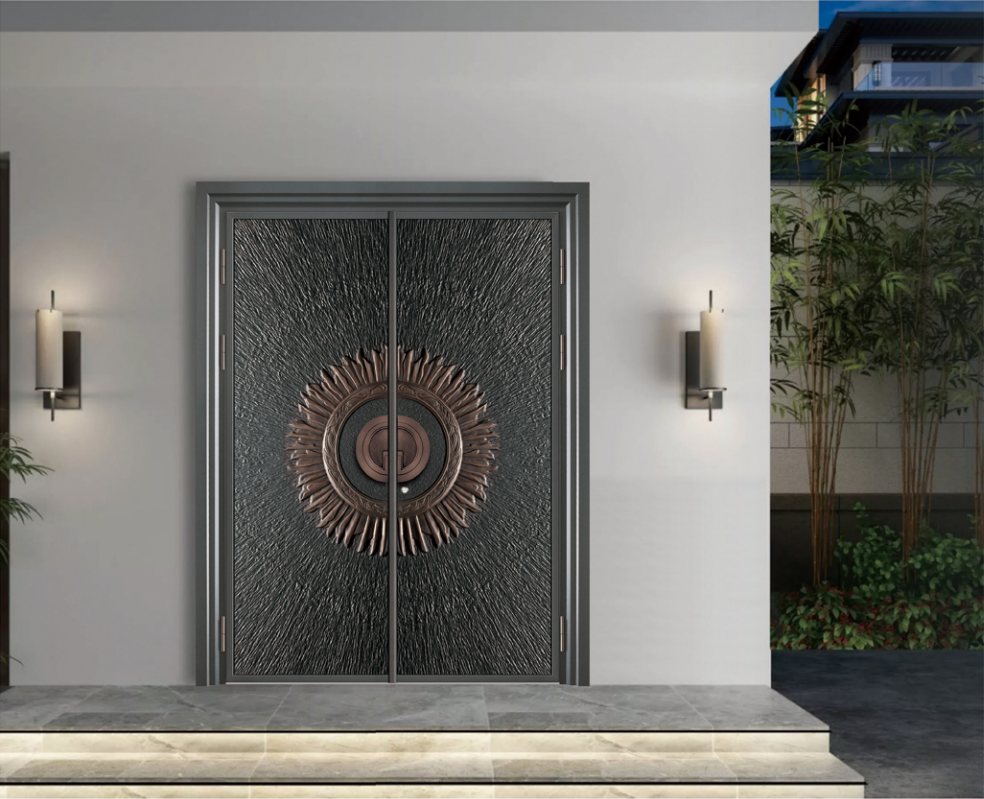
Aluminum entry doors have become a hallmark of contemporary architecture, combining structural resilience, thermal efficiency, and design adaptability. This article explores the technical and aesthetic considerations in aluminum entry door design, supported by industry standards, material innovations, and performance benchmarks.
1. Material Selection and Structural Engineering
Aluminum Alloys: High-grade alloys like 6063-T6 (BS EN 755-9) are preferred for their tensile strength (≥160 MPa) and corrosion resistance. These alloys support door leaf weights up to 150 kg while maintaining dimensional stability .
Thermal Break Design:
Polyamide insulating bars (24–34 mm width) are integrated into extruded profiles to reduce thermal bridging, achieving U-factors as low as 0.33 in triple-glazed configurations .
Multi-chamber frame designs (70–100 mm depth) enhance structural rigidity and thermal performance, complying with ASHRAE 90.1 standards for non-residential buildings .
Load-Bearing Capacity:
Calculations for aluminum profiles involve deflection limits (e.g., L/175 under wind loads) and stress distribution. For example, a 20×20 mm profile with 2 mm wall thickness can bear up to 20–40 kg/m depending on fixation methods (fixed, supported, or cantilevered) .
2. Surface Treatment and Aesthetic Customization
Finishing Techniques:
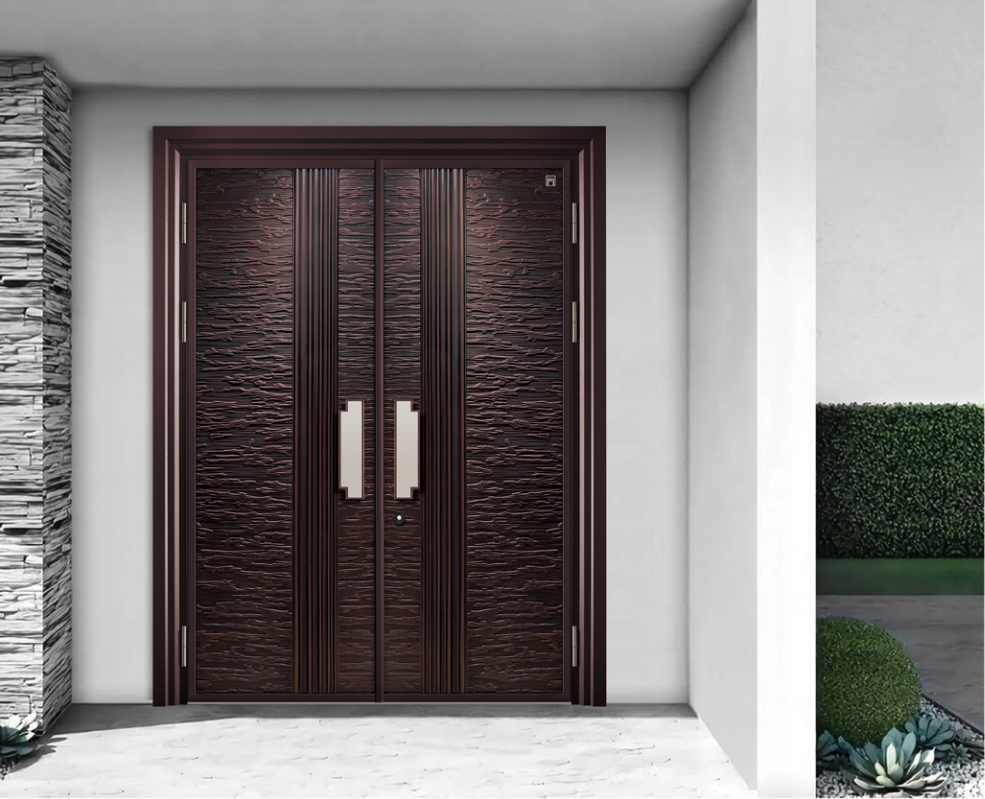
Anodizing: Compliant with AAMA 611, anodized finishes (AA-M12C22A41) provide a 20+ year lifespan with minimal maintenance, available in silver, bronze, and champagne tones .
Powder Coating: Electrostatic polyester coatings (BS 6496) offer 200+ color options, including dual-tone finishes for interior/exterior differentiation. Fluorocarbon coatings (AAMA 2605) add UV resistance for coastal applications .
Surface Integrity:
Post-treatment processes ensure zero visible scratches, burrs, or color variance between adjacent components. CNC-machined mitred joints (45°±0.5°) achieve seamless assembly with tolerances <0.3 mm .
3. Thermal and Acoustic Performance
Glazing Systems:
Triple-sealed EPDM gaskets and structural silicone glazing maintain air infiltration rates ≤0.3 CFM/ft² (ASTM E283). Dynamic glazing options, such as electrochromic (EC) glass, adjust visible transmittance (VT 0.15–0.72) for climate-responsive design .
Insulated glass units (IGUs) with argon filling and low-emissivity coatings achieve U-values ≤0.77 W/m²·K, meeting NFRC 100 requirements for energy-efficient buildings .
Acoustic Insulation:
Laminated glass (6–8 mm thickness) reduces noise transmission by 35–40 dB, ideal for urban environments .
4. Security and Forced-Entry Resistance
Structural Reinforcement:
Reinforced stainless steel hinges (316 grade) and multi-point locking systems withstand dynamic loads ≥4,500 N (AAMA 1302.5). PAS 24-certified designs integrate anti-lift shims and tamper-proof screws .
Ballistic and blast-resistant configurations use laminated glass paired with extruded frames tested to AAMA 512 tornado mitigation standards.
Testing Protocols:
Forced-entry tests simulate crowbar attacks (300 lb point load) to ensure gaps ≤6 mm between door and frame .
Cyclic pressure testing (up to 3,000 Pa) validates wind load resistance in hurricane-prone regions .
5. Manufacturing and Installation Precision
Fabrication Processes:
Extrusion: Billets heated to 375–500°C are forced through dies to create profiles with tolerances ±0.1 mm. Post-extrusion aging (T5/T6 temper) enhances mechanical properties .
Assembly: Mechanically fixed corner cleats and Torx T30 security screws ensure joint rigidity. Pre-installed drainage channels prevent water ingress at thresholds .
Installation Guidelines:
Anchor spacing ≤300 mm with 316 stainless steel fasteners. Shim intervals ≤400 mm vertically maintain alignment .
Post-installation air leakage tests (ASTM E283) and thermal imaging validate airtightness and insulation integrity .
6. Sustainability and Circular Design
Recycled Content: Minimum 70% post-industrial scrap in extrusions reduces embodied carbon .
Disassembly: Modular designs enable 90% material recovery at end-of-life. Secondary smelting cuts production energy by 95% vs. virgin aluminum .
7. Emerging Trends
Smart Integration: IoT-enabled sensors monitor seal degradation and thermal performance, enabling predictive maintenance .
Graphene-Enhanced Alloys: Experimental composites increase hardness by 40% without compromising conductivity .
Conclusion
Modern aluminum entry door design balances technical rigor with aesthetic versatility. By adhering to AAMA 2605 coatings, NAFS-22 structural standards, and ASHRAE 90.1 thermal criteria, these systems meet the demands of high-performance architecture. Innovations in material science and smart technologies will further solidify aluminum’s role in sustainable, secure building envelopes.
Foshan Nanhai Jinfancheng Metal Building Materials Products Co., Ltd. is a leading innovator in aluminum architectural solutions with 15 years of expertise. Specializing in Entrance Doors, Room Doors, and Villa Doors, the company combines cutting-edge technology with artistic design to deliver secure, energy-efficient, and aesthetically refined products. Equipped with ISO9001, ISO14000, CCC, and CE certifications, Jinfancheng ensures premium quality through advanced production processes, including PA66 thermal breaks, aerospace-grade cores, and fluorocarbon coatings for durability and style. Renowned as "Aluminum Art and Home," it has earned accolades like "Top Ten Industry Brand" and partners with institutions like Peking University to pioneer smart, sustainable building materials. Committed to "Quality Innovation, Service First," Jinfancheng elevates living and working spaces globally while driving the future of intelligent architectural systems.