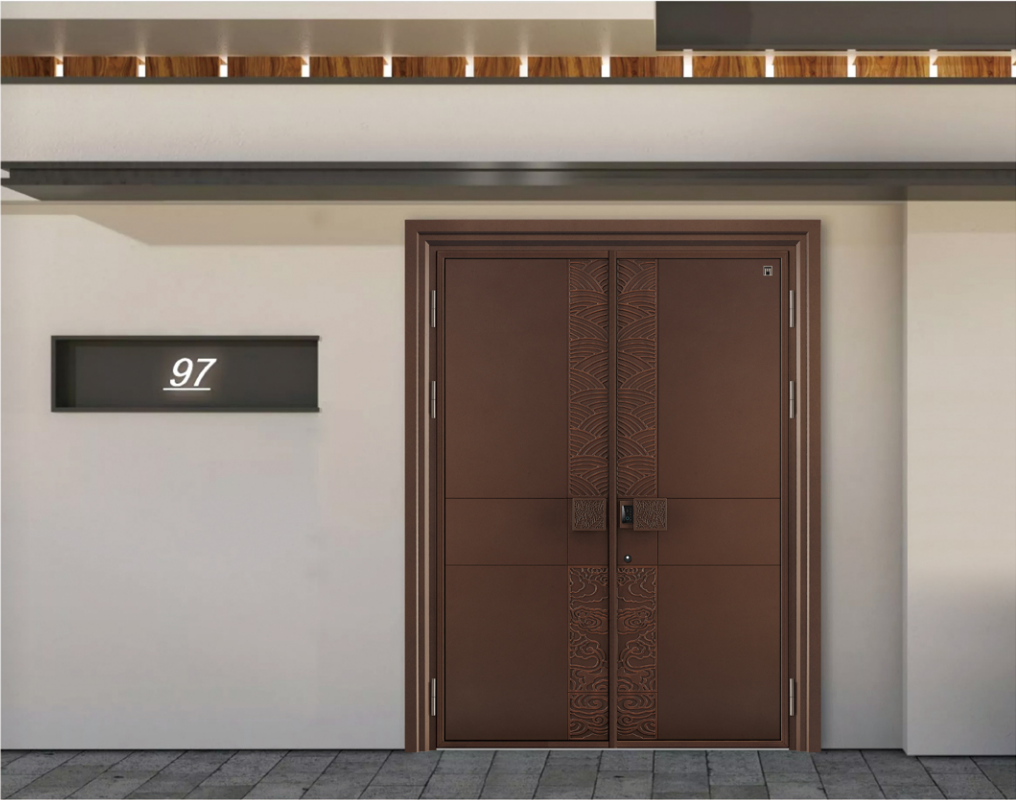
Thermal break aluminum doors, commonly referred to as "broken bridge" or "thermally broken" aluminum doors, are engineered to address the inherent thermal conductivity of aluminum while retaining its structural benefits. This design innovation has revolutionized energy-efficient architecture, combining durability with advanced thermal performance. Here’s an in-depth exploration of its design principles, materials, manufacturing, and applications.
1. Structural Design: Bridging the Thermal Gap
The core innovation lies in the thermal barrier—a non-conductive material inserted between the inner and outer aluminum profiles. This barrier disrupts heat transfer pathways, reducing thermal bridging by up to 95% compared to non-thermally broken aluminum .
Dual Aluminum Frames: Two extruded aluminum profiles form the inner and outer frames.
Insulating Core: A polyamide (PA66) strip, with a thermal conductivity of 0.3 W/m·K, is mechanically bonded between the frames. This material’s low conductivity contrasts sharply with aluminum’s 209 W/m·K, effectively blocking heat flow .
Triple Sealing: Enhanced air and water tightness is achieved through three-layer EPDM gaskets, ensuring gaps ≤0.3 mm and air infiltration rates ≤0.3 CFM/ft² (per ASTM E283) .
2. Material Science: Alloy Selection and Surface Treatments
Aluminum Alloy 6063-T5
The primary material for frames is 6063-T5 aluminum, chosen for its balance of extrudability and mechanical properties:
Composition: Magnesium (0.45–0.9%) and silicon (0.2–0.6%) form Mg₂Si precipitates during T5 tempering, enhancing strength and corrosion resistance .
Mechanical Performance: Tensile strength of 186–210 MPa and elongation of 8–12%, ensuring structural integrity under wind loads up to 9-level standards (per ASHRAE 90.1) .
Surface Finishes
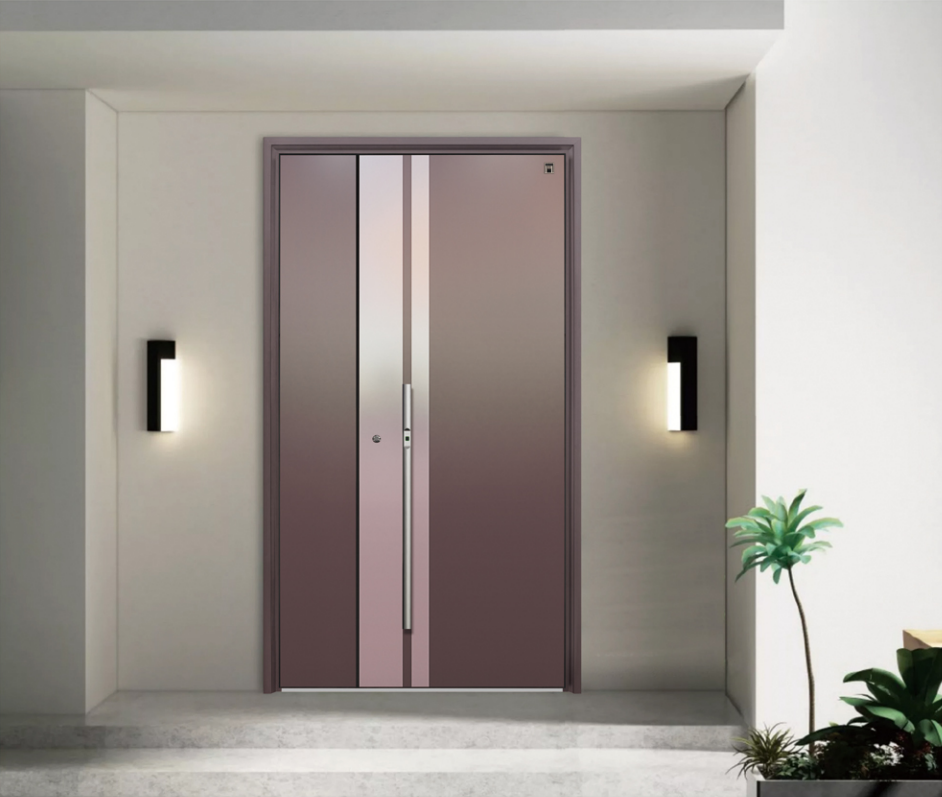
Anodizing (AAMA 611): Creates a 20+ µm oxide layer for scratch resistance and UV stability in metallic tones like silver or bronze .
Powder Coating (AAMA 2605): Offers 200+ color options with superior UV resistance, ideal for coastal environments .
3. Manufacturing Process: Precision and Quality Control
Thermal break profiles are produced through a multi-step extrusion and assembly process:
Extrusion: Billets of 6063-T5 alloy are heated to 375–500°C and forced through dies to form profiles with ±0.1 mm tolerances .
Knurling: Jagged "teeth" are pressed into the aluminum cavities to anchor the polyamide strip .
Strip Insertion: PA66 strips are fed into the channels, ensuring precise alignment for thermal continuity .
Crimping: Hydraulic rollers compress the profiles, locking the strip in place and achieving shear strengths exceeding 24 N/mm² .
Glazing: Triple-glazed units with Low-E coatings and argon gas fills are installed, achieving U-values as low as 0.33 W/m²K.
4. Performance Advantages
Energy Efficiency
Thermal Insulation: Reduces heat loss by 30–40%, meeting stringent codes like California Title 24 and ASHRAE 90.1-2025 .
Condensation Prevention: Inner surface temperatures remain close to indoor levels, minimizing moisture buildup .
Acoustic and Structural Benefits
Noise Reduction: Multi-chamber designs and laminated glass cut noise by 30–50 dB, ideal for urban settings .
Durability: Corrosion-resistant coatings and 316-grade stainless steel hinges ensure a 40+ year lifespan with minimal maintenance .
Aesthetic Flexibility
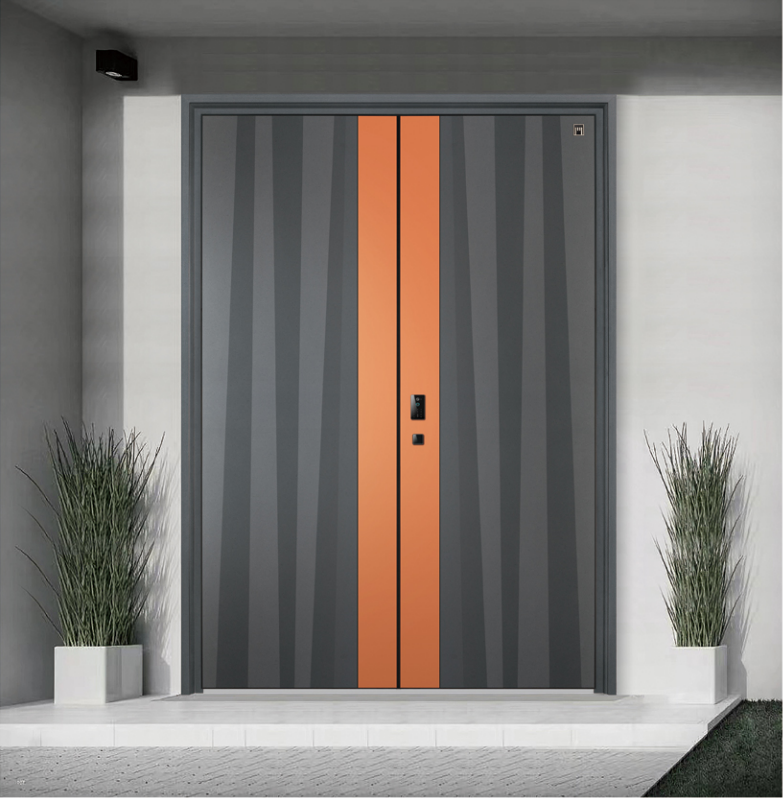
Dual-Color Options: Anodized inner frames can pair with powder-coated exteriors, supporting diverse architectural styles .
5. Applications and Market Trends
Residential and Commercial Use
High-Rise Buildings: Thermal break doors dominate skyscraper façades due to their wind resistance (up to 9-level standards) .
Smart Integration: IoT-enabled sensors monitor seal integrity and thermal performance, enabling predictive maintenance .
Sustainability
Recyclability: Aluminum’s closed-loop recycling system recovers 90% of material, reducing embodied carbon by 95% compared to virgin production .
Comparison with Alternatives
Feature Thermal Break Aluminum uPVC Composite
U-Value (W/m²K) 0.33–0.5 1.2–1.6 0.8–1.0
Lifespan (Years) 40+ 20–25 25–30
Maintenance Annual cleaning Sealant replacement Repainting every 5–7y
Aesthetic Options 200+ colors, metallic Limited textures Wood-grain finishes
Conclusion
Thermal break aluminum doors exemplify the synergy of material innovation and precision engineering. By integrating polyamide barriers, advanced alloys, and sustainable manufacturing, they address modern demands for energy efficiency, durability, and design versatility. As smart technologies and stricter energy codes evolve, these doors will remain pivotal in sustainable architecture, offering solutions that balance performance with environmental stewardship.
Foshan Nanhai Jinfancheng Metal Building Materials Products Co., Ltd. is a leading innovator in aluminum architectural solutions with 15 years of expertise. Specializing in Entrance Doors, Room Doors, and Villa Doors, the company combines cutting-edge technology with artistic design to deliver secure, energy-efficient, and aesthetically refined products. Equipped with ISO9001, ISO14000, CCC, and CE certifications, Jinfancheng ensures premium quality through advanced production processes, including PA66 thermal breaks, aerospace-grade cores, and fluorocarbon coatings for durability and style. Renowned as "Aluminum Art and Home," it has earned accolades like "Top Ten Industry Brand" and partners with institutions like Peking University to pioneer smart, sustainable building materials. Committed to "Quality Innovation, Service First," Jinfancheng elevates living and working spaces globally while driving the future of intelligent architectural systems.