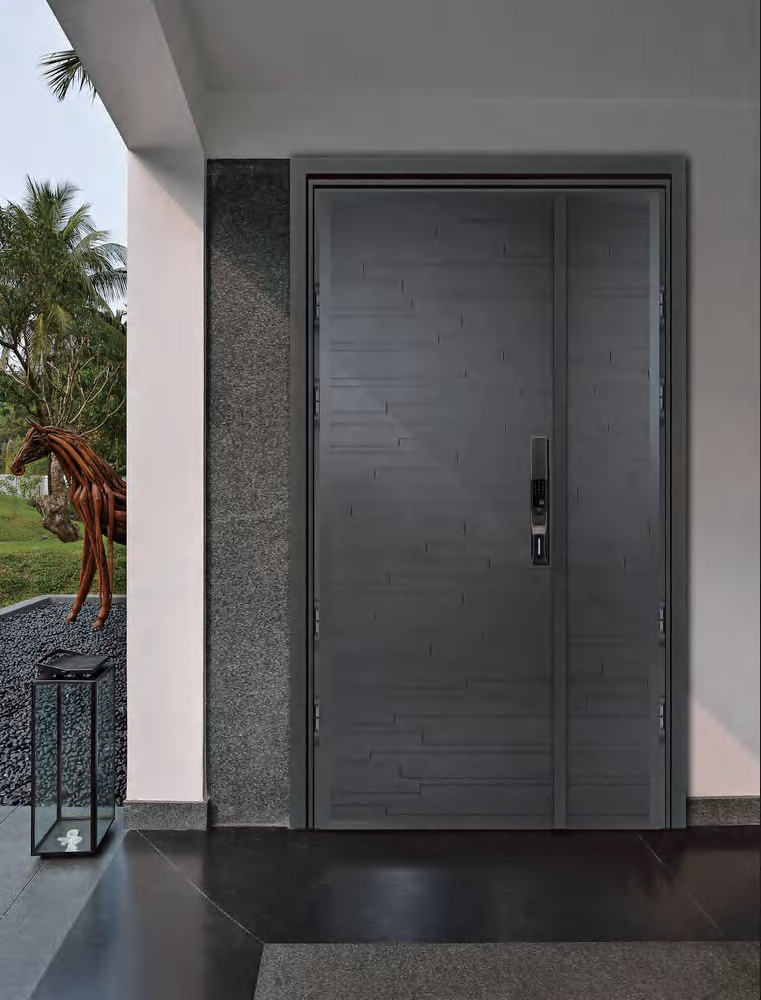
The proliferation of handleless touch-sensitive aluminum doors, which rely on capacitive sensors or gesture-based mechanisms to trigger opening, may subtly influence human muscle memory associated with traditional door-pushing actions. Muscle memory, rooted in the brain's motor cortex and cerebellum, consolidates through repetitive practice. While short-term interactions with such doors might temporarily disrupt ingrained pushing habits, long-term adaptation depends on the consistency of new gestures and the brain’s neuroplasticity.
Traditional door operation involves a coordinated sequence: reaching for a handle, gripping, and applying force. Handleless designs replace this with touch-sensitive zones, swipe gestures, or proximity detection, requiring users to recalibrate spatial awareness and force application. For instance, capacitive sensors (common in automotive and smart home systems) detect subtle finger contact without mechanical pressure, while gesture-controlled systems demand precise hand movements. These interactions engage different neural pathways, potentially weakening the "grip-and-push" motor engrams over time. However, muscle memory is highly context-dependent. If users intermittently encounter both traditional and touch-sensitive doors (e.g., using a Room Door at home versus an Entrance Door in offices), the brain may compartmentalize these skills rather than overwrite them entirely.
Notably, frequent exposure to handleless systems—especially in high-use environments like Villa Door installations—could accelerate adaptation. Studies on skill acquisition suggest that prolonged practice with new interfaces strengthens synaptic connections in the motor cortex, gradually automating novel movements. Yet, complete eradication of older memories is unlikely; instead, the brain prioritizes the most frequently used patterns. Thus, while handleless doors may refine or supplement muscle memory, a radical transformation would require near-total replacement of traditional designs across all environments.
In conclusion, handleless aluminum doors introduce incremental shifts in door-operation habits, but the persistence of muscle memory hinges on usage frequency, design intuitiveness, and contextual diversity. As touchless technology evolves, its integration into Entrance Door, Room Door, and Villa Door systems will likely foster hybrid motor strategies rather than erase deeply ingrained behaviors.